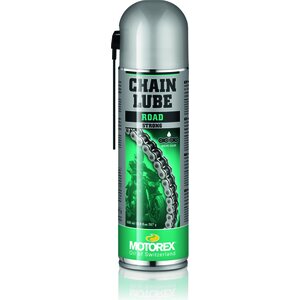
Motorcycle chains and sprockets are under heavy stress. They constantly encounter road sand, dust, water, mud, and immense mechanical strain.
Regular motorcycle chain maintenance – meaning cleaning, lubricating, and tension checking – is one of the cheapest and easiest ways to ensure your bike's safety, peak performance, and a long lifespan for an expensive chain kit.
In this guide by Takatalo experts, we will go through step-by-step how to perform chain maintenance properly at home. Prop your bike up and let's get started!
Why is chain maintenance essential?
Modern motorcycles almost exclusively use sealed chains (O-ring, X-ring, or Z-ring). Inside these chains is factory grease, protected behind small rubber seals.
When you ride, road dust and sand stick to the surface of the chain, forming an abrasive paste together with the chain lube. This paste wears down and breaks the seals, causing the factory grease to escape, water to enter, and the chain to stretch and stiffen until it becomes unusable.
Rule of thumb: Check and lubricate the chains approximately every 500–800 kilometers, and always after riding in the rain. Chain cleaning should be done every 1000–1500 kilometers, or whenever they look visibly dirty.
Step 1: Cleaning the motorcycle chain
Never lubricate a dirty chain! New lube on top of old dirt only binds sand even more effectively. So, let's start with a thorough cleaning.
What you need:
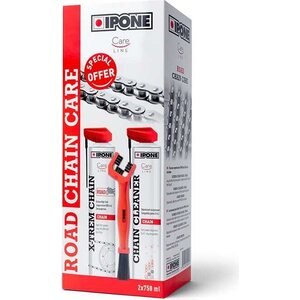
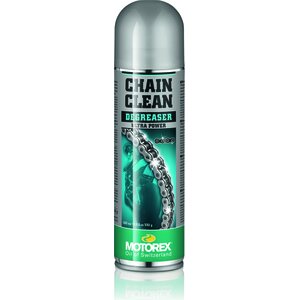
- Motorcycle chain cleaner (Chain Cleaner)
- A chain brush (a three-sided brush is best) or a soft-bristled brush
- A lint-free cloth or a microfiber towel
Do it like this:
- Raise the bike onto a stand: The rear wheel needs to spin freely (for example, using a paddock stand or a center stand). Note! Never keep the bike running in gear while maintaining the chains. The risk of severe finger injuries is massive.
- Spray the cleaner: Apply plenty of chain cleaner to both the inner and outer surfaces of the chain. Let the product work for a few minutes to dissolve the old grease.
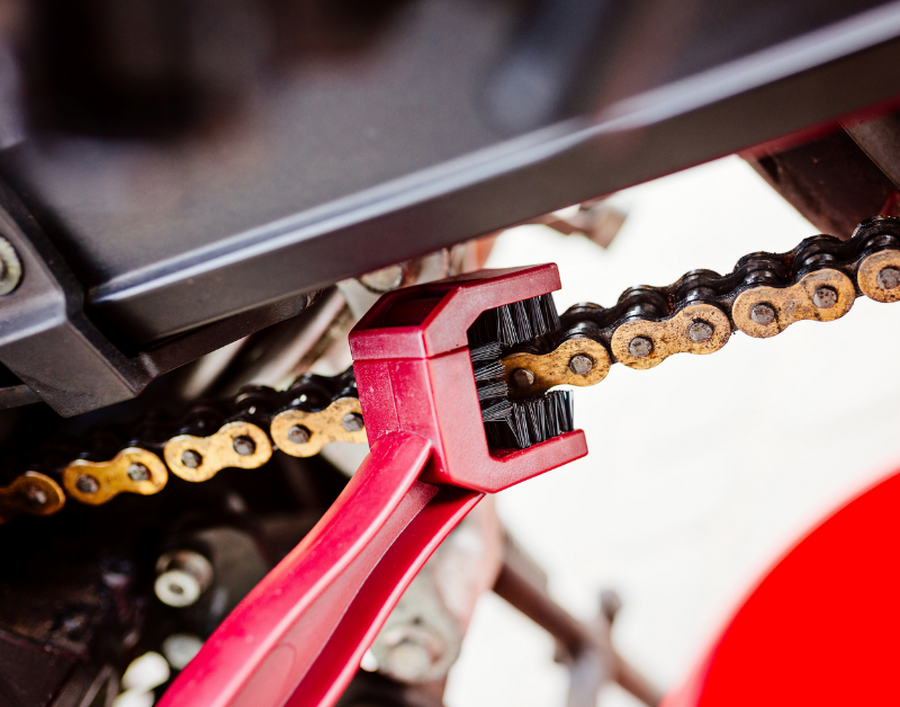
- Brush off the dirt: Use the chain brush and rotate the wheel by hand. Brush the chain from all sides to remove the stubborn grimy paste from between the links as well.
- Wipe and dry: Wipe away the dislodged dirt and cleaner with a cloth. If necessary, you can rinse the chains gently with low-pressure water. Never use a pressure washer directly on the chains, as its powerful jet will damage the rubber seals. Let the chain dry completely before lubricating.
Step 2: Lubricating the motorcycle chain
Once the chain is clean and completely dry, it's time for lubrication. The correct lubricating technique ensures that the lubricant ends up where it is needed – namely, under the rollers and protecting the sealing rings.
Do it like this:
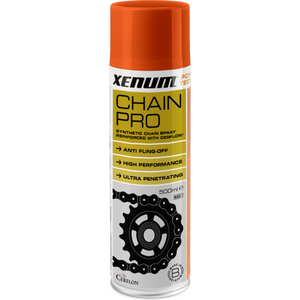
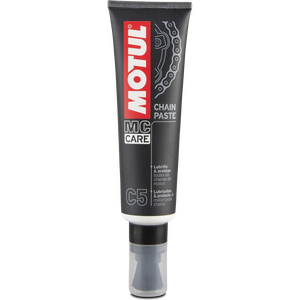
- Choose the right product: Use a high-quality motorcycle chain spray or chain wax. For street use, a clear or white chain lube is often suitable, as it flings less at high speeds. For off-road and enduro riding, specific dry lubricants that attract less dust are recommended.
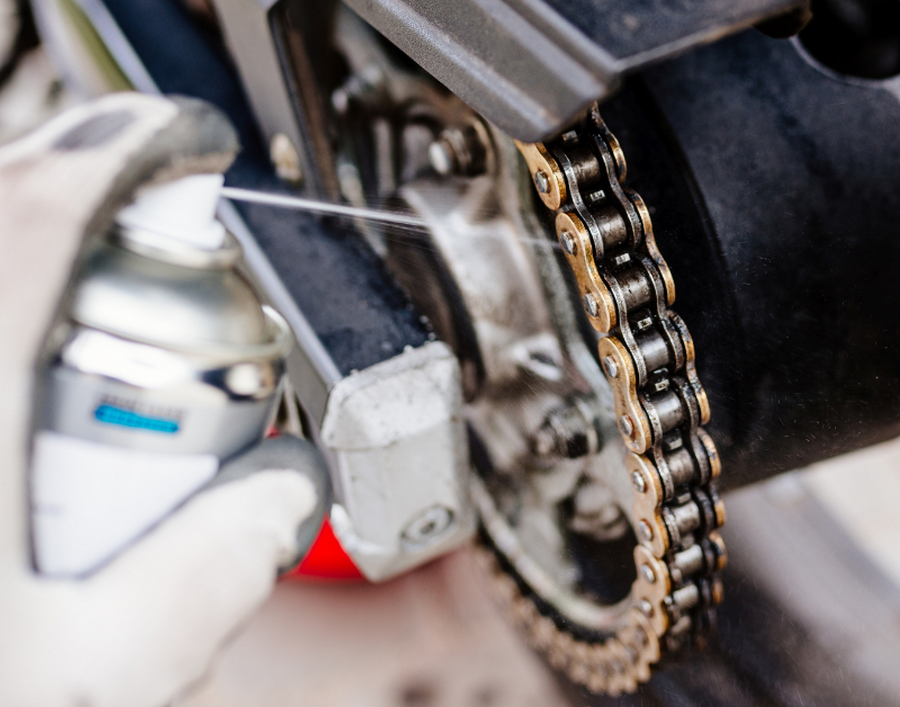
- Spray on the inside: Spray the chain lube onto the inner curve of the chain (the lower chain run) while slowly rotating the wheel backward by hand. Centrifugal force will drive the lube inside the chain during riding. If you spray the lube only on the outer surface of the chain, it will fly off onto your rim and rear fairings during the very first meters.
- Aim correctly: Target the spray especially at the sides of the chain where the sealing rings (O/X-rings) are located, as well as on the center rollers.
- Let it settle: Chain lubes contain solvents that make them fluid at first so they can penetrate the gaps. Let the lube settle and "dry" for at least 15–30 minutes before riding (preferably overnight) so it bonds tightly and does not fling off.
Step 3: Checking and adjusting chain tension
Chains that are too loose can slap against the swingarm, snap off the sprocket in the worst-case scenario, or worsen throttle response. On the other hand, chains that are too tight will wear out the chain kit in no time and can damage the gearbox output shaft bearing or even snap the chain when the suspension compresses.
How to check the tension:
- Check your bike's manual or the sticker on the swingarm for the correct slack (usually around 25–40 mm depending on the bike type).
- Measure the chain's free play (slack) from the middle of the lower swingarm run by pushing the chain first down and then up with your finger.
- Rotate the wheel and measure the slack in a few different spots. Chains often wear unevenly; the adjustment must always be made according to the tightest spot of the chain.
How to tighten the chain briefly:
- Loosen the rear axle nut.
- Adjust the tension screws or blocks at the end of the swingarm gradually and completely evenly on both sides. Use the alignment marks on the swingarm as a guide to keep the rear wheel straight.
- Tighten the rear axle nut to the manufacturer's specified torque using a torque wrench.
- Recheck the tension and wheel alignment after the final tightening.
Summary: Safe kilometers with clean chains
Chain maintenance only takes about 15 minutes, but it saves hundreds of euros by preventing premature chain replacements. When you make it a habit to wipe and lubricate your chains regularly, cleaning becomes easier, and you can trust your chains to roll smoothly and durably.
You can find all the necessary chain care products, brushes, lubricants, and tools directly from Takatalo's wide selection. Keep your bike in top shape and order supplies from our online store or swing by our shop in Salo!
Chain lube και chain καθάρισμα Varikkopukit
Frequently Asked Questions (FAQ)
How often should motorcycle chains be lubricated?
Chains should be lubricated approximately every 500–800 kilometers. If you ride in rain, mud, or on dusty gravel roads, the chains should be cleaned and lubricated immediately after the ride to prevent moisture from bypassing the seals and causing corrosion.
Can motorcycle chains be cleaned with WD-40 or kerosene?
Preferably not. Although many people use kerosene or general-purpose oils, we strongly recommend official chain cleaners (Chain Cleaner) developed specifically for O- and X-ring chains. Wrong, overly aggressive solvents can dry out, swell, or damage the chain's delicate rubber seals, which quickly destroys the chain from the inside out.
How do you know if the motorcycle chains are worn out and need replacement?
Clear signs of a needed replacement include: uneven stretching of the chain (slack changes significantly when rotating the wheel), stiff chain links that stay kinked, or if you can pull the chain clearly away from the back of the rear sprocket so that a sprocket tooth is exposed.
Also, the teeth of the rear sprocket wearing into a "hooked" shape indicates it is time for a replacement. Chains and sprockets should always be replaced at the same time as a complete kit.
Should chains be lubricated right after a ride or before a ride?
You get the best results when you lubricate the chains right after a ride while the chain is still warm. The heat helps the lube run and penetrate better between the rollers and seals. Additionally, the lube has time to dry and bond before the next ride, so it doesn't fling onto the rim and your riding gear.
Μπορεί επίσης να σας ενδιαφέρει
Xenum In & Out Diesel – The most effective solution on the market for diesel engine cleaning without disassembly
Modern diesel engines are precision machines, but they share one common enemy: carbon deposits and soot.
If your car suffers from power loss, increased fuel consumption, or a clogged Diesel Particulate Filter (DPF), the solution doesn't necessarily require an expensive visi...
Avoid expensive AdBlue repairs with the right additives
AdBlue Problems? Prevent Crystallization with Xenum Admax
AdBlue is an essential part of modern diesel emissions control, but for many drivers, it is also a constant source of headaches.
System failure often leads to expensive repairs and, at worst, can leave you strande...
Moottoripyörän talvisäilytys: Kattava opas onnistuneeseen ajokauden aloitukseen
Suomen talvi on moottoripyörälle haastava: lämpötilavaihtelut, kosteus ja pitkä seisonta-aika asettavat tekniikan koetukselle.
Oikeaoppinen moottoripyörän talvisäilytys ei ainoastaan pidennä pyöräsi käyttöikää, vaan varmistaa, että olet keväällä ensimmäisten joukossa tien p...

 +
+